Loading…
Double Chin Contouring
A Cleaner Line From Chin To Neck
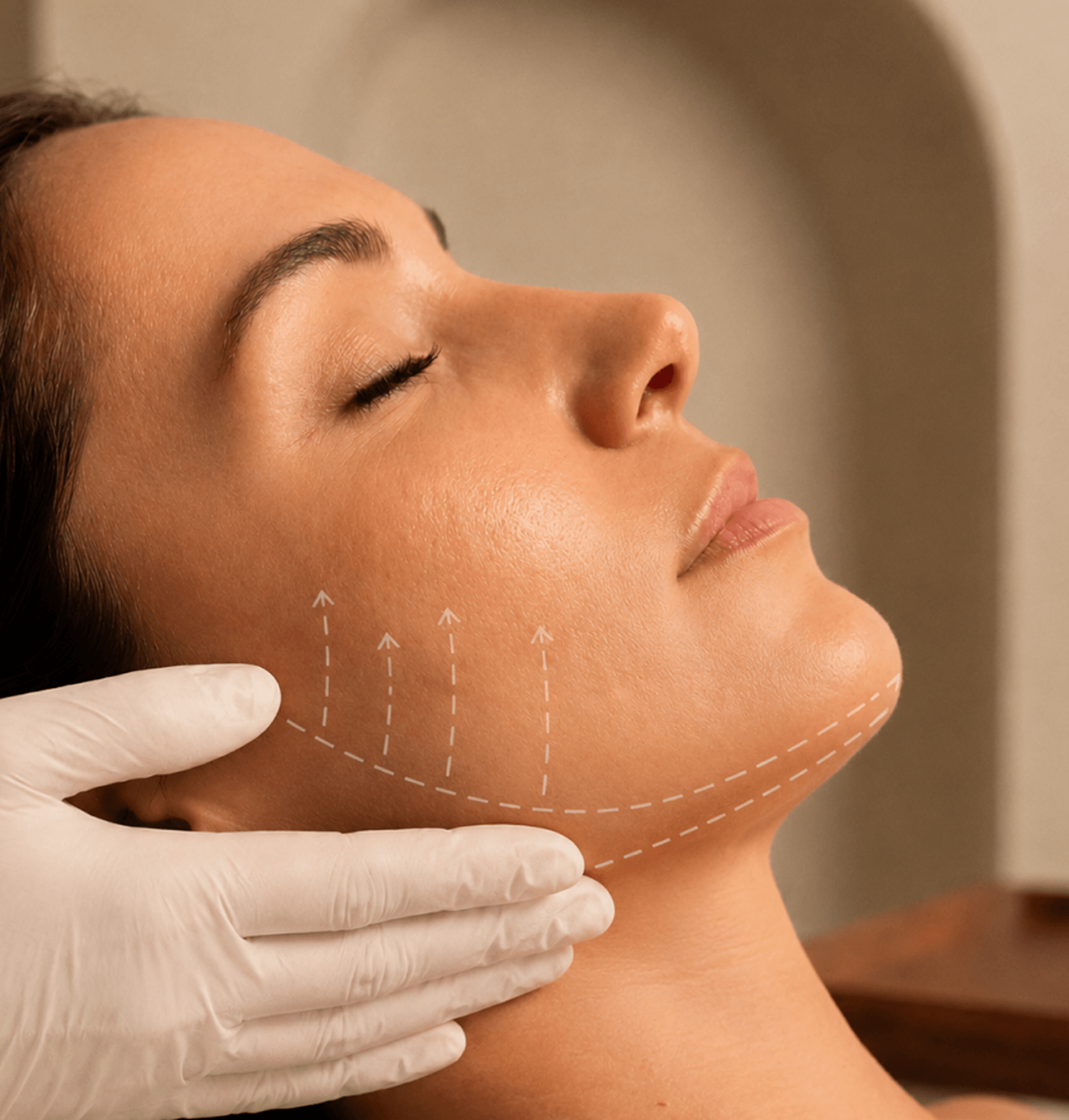
Double Chin Contouring addresses excess tissue beneath the chin to create a more defined profile. Depending on your anatomy, treatment may focus on localised fat, excess skin or a combination of both to refine the relationship between the chin, jawline and neck.

Know the Science of
Double Chin Contouring
Understands The Source Of Fullness
- Looks at the tissue beneath the chin
- Assesses fat, skin and underlying structure
- Identifies what is shaping the profile

How Double Chin Contouring Changes Your Profile
A Cleaner Under-Chin Line
Reducing excess tissue can create a more defined transition between the chin and neck.
Greater Jawline Definition
Less fullness beneath the chin can make the existing outline of the jaw more noticeable.
A Stronger Side Profile
Refining the submental area can improve the way the chin, jaw and neck relate when viewed from the side.
More Balanced Facial Proportions
The aim is not simply to remove fullness, but to create a contour that works with your existing facial structure.
- Tightening

Underlying neck muscles can be tightened with sutures.
- Support
A chin strap may support the healing skin.
- Duration
Surgery takes 45 minutes to a few hours.
Dos and Don’ts
Aftercare
Support The Treated Area
If prescribed, wear your compression garment or chin support as directed to help manage swelling and support the healing tissues.
Keep Your Neck Movement Controlled
Avoid sudden turns and excessive neck movement while the treated area is healing.
Sleep With Your Head Elevated
Keeping your head elevated while resting can help reduce postoperative swelling.
Give The Contour Time To Emerge
Swelling and bruising can temporarily soften the definition, so allow the area to settle before assessing the developing result.
Be Gentle Around The Incisions
Follow the specific instructions provided for dressings, incision hygiene and any drains if these are part of your procedure.
Ease Back Into Exercise
Keep activity limited initially and return to exercise only when your expert confirms it is appropriate for your recovery.

FAQs
Clarity to help you understand the treatment, what it does, and how it feels.
A fuller area beneath the chin can have several causes. Localised fat is one, but loose skin, reduced skin elasticity, ageing, weight changes and inherited facial structure can also influence the profile. This is why the area needs to be assessed as a whole before deciding which form of contouring is appropriate.
Related Specialties