Loading…
Hair Transplantation
A Hairline That Grows With You
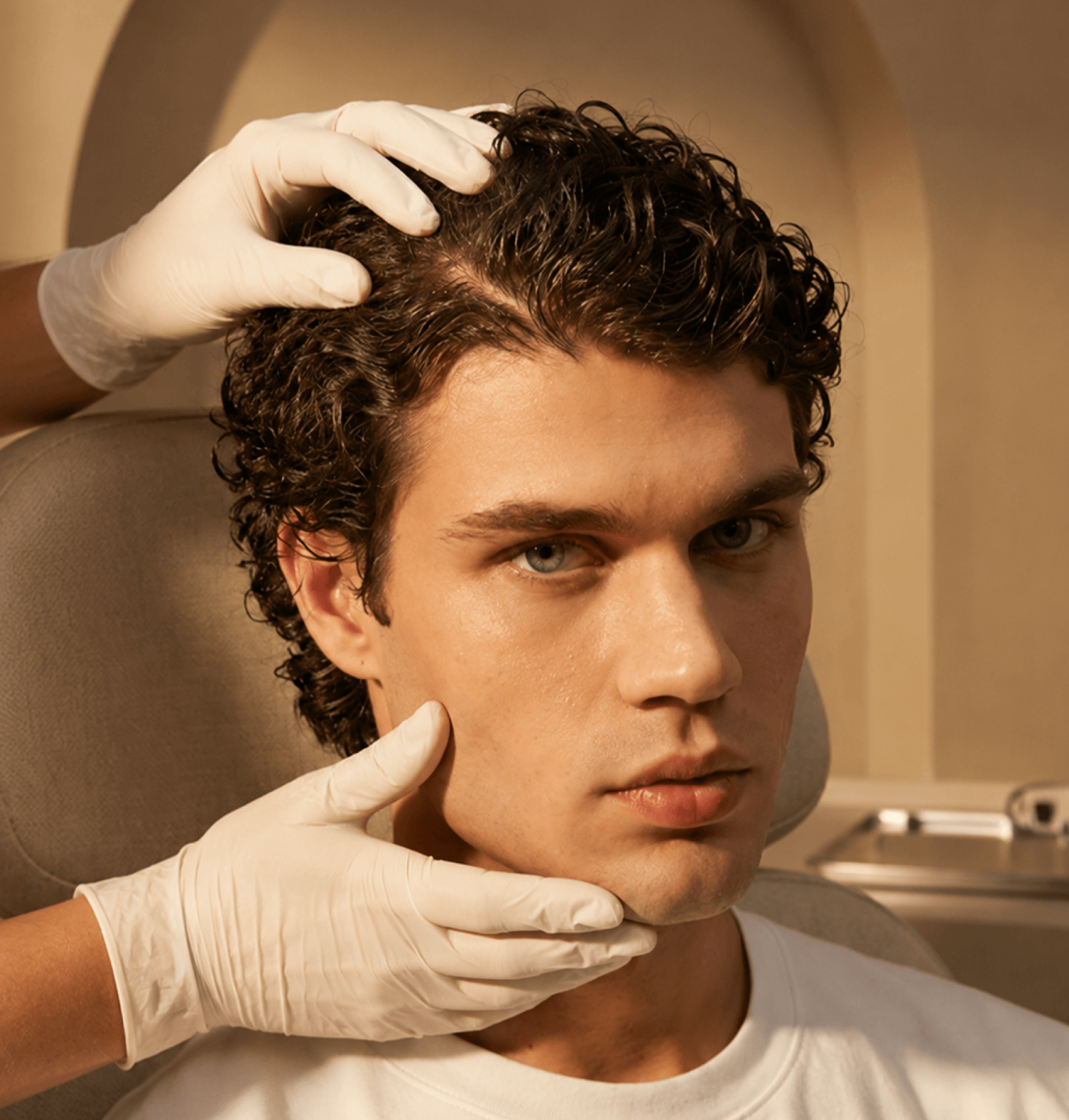
Hair transplantation relocates healthy hair follicles from areas of stronger growth, usually the back and sides of the scalp, to areas experiencing thinning or hair loss. The transplanted follicles can continue to grow naturally, restoring density and definition.

Know the Science of
Hair Transplantation
Uses Your Own Follicles
- Follicles are taken from a donor area
- Donor hair is often more resistant to thinning
- Grafts retain their growth characteristics

How Hair Transplantation Changes Your Routine
Restored Density
Transplanted follicles can bring fullness back to thinning areas.
A Natural-Looking Hairline
Careful design creates a hairline that suits your features.
Less Reliance On Concealment
Growing hair can reduce the need for styling workarounds or cosmetic cover.
Hair That Grows Naturally
Transplanted hair can be cut, styled and washed like the rest of your hair.
- Technique

Performed by strip harvesting or individual graft extraction.
- Anaesthesia
Usually carried out under local anaesthetic and sedation.
- Outpatient
Typically a day procedure with no overnight stay.
Dos and Don’ts
Aftercare
Protect The Grafts
Avoid touching, scratching or knocking the transplanted area in the first days.
Sleep With Your Head Elevated
Elevation can help reduce swelling around the forehead.
Follow Washing Instructions
Wash your scalp exactly as advised to protect newly placed grafts.
Avoid Sun And Heat
Shield your scalp from direct sun, saunas and steam rooms during early healing.
Pause Strenuous Exercise
Avoid heavy sweating and exertion for the period your expert recommends.
Expect Temporary Shedding
Shedding of transplanted hair is a normal part of the growth cycle.

FAQs
Clarity to help you understand the treatment, what it does, and how it feels.
Hair transplantation may suit individuals with pattern hair loss or localised thinning who have sufficient healthy hair at the back and sides of the scalp to use as donor hair. Your expert will assess your hair loss pattern, the density and quality of your donor area, your scalp health and your expectations before recommending whether a transplant is appropriate.
Related Specialties