Loading…

Precision Implant Dentistry
Every Angle, Planned In Advance
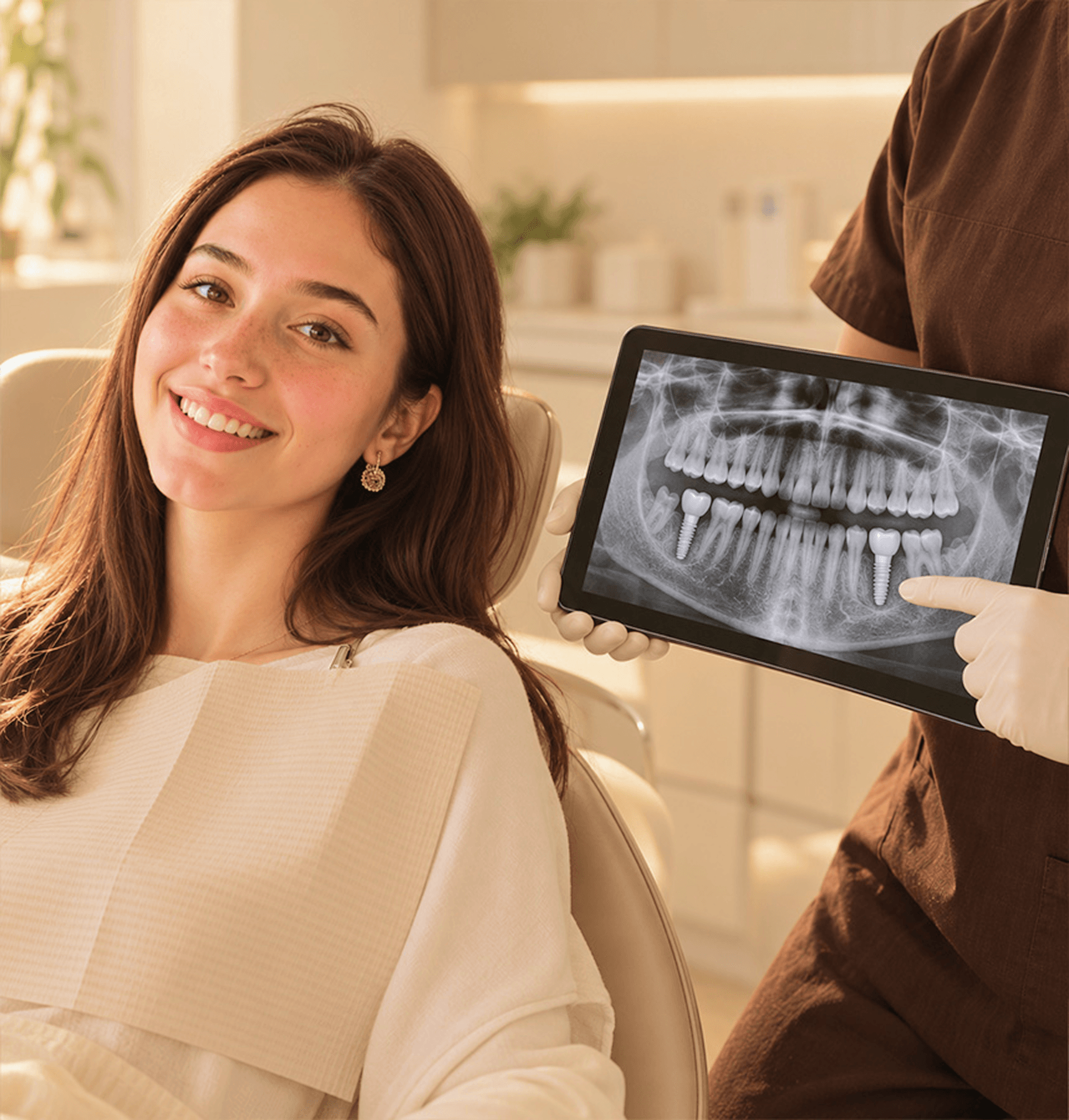
Precision implant dentistry plans each implant from 3D imaging so it is placed at the intended angle and depth. Mapping bone, nerves and sinuses before surgery helps protect surrounding structures and positions the implant to support a natural-looking restoration.

Know the Science of
Precision Implant Planning
Starts With 3D Imaging
- Bone volume is measured
- Nerves and sinuses are located
- Bone quality is assessed

How Precision Planning Changes Your Routine
A Clear Plan
You know each stage before treatment begins.
A Smoother Procedure
Surgery follows an agreed position.
A Natural Result
Implants are positioned to support the visible restoration.
Fewer Surprises
Bone and anatomy are assessed in advance.
- Planned

Three-dimensional imaging permits precise angle and depth determination.
- Guided
Surgical template transfers planned position to operative site.
- Protected
Digital mapping identifies nerves and sinuses prior surgery.
Dos and Don’ts
Aftercare
Follow Surgical Instructions
Careful aftercare protects early healing.
Eat Soft Foods Initially
Avoid chewing directly on the implant site.
Clean Meticulously
Brush and use interdental aids around the implant.
Avoid Smoking
Smoking slows healing and raises the risk of implant failure.
Attend Healing Reviews
Integration is monitored before the final restoration.
Keep Maintenance Appointments
Implants need professional cleaning, just like teeth.

FAQs
Clarity to help you understand the treatment, what it does, and how it feels.
The implant itself may be the same. The difference is in the planning: position, angle and depth are set from 3D imaging before surgery, and a surgical guide may be used to transfer that plan accurately to the mouth.
Related Specialties