Loading…
Laser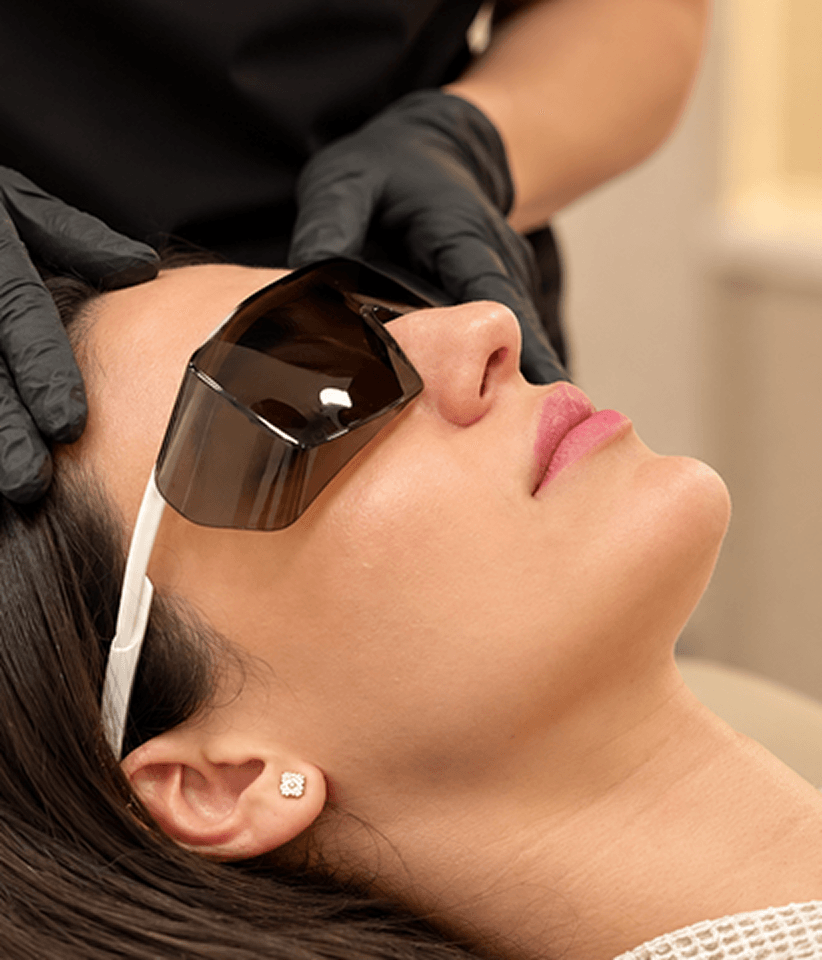
What Is Fotona 4D? Four Laser Modes, One Plan and What to Expect
26 October 20265 minsFotona 4D uses four laser modes in a single appointment, each working at a different depth. What each mode does, what the session involves, and how results develop.
A middle ground between doing nothing and surgery
There is a point at which the early signs of ageing are visible but surgery feels disproportionate. Laxity is mild, fine lines are beginning to settle, and texture has changed. This is the space that non-surgical laser rejuvenation is designed for, and Fotona 4D is one of the most discussed approaches within it.
Fotona 4D is not a single laser setting. It is a protocol that combines two wavelengths, Er:YAG and Nd:YAG, across four modes delivered in sequence in one appointment. Each mode addresses a different layer, from the inside of the cheek to the surface of the skin.
The four modes, and what each one does
SMOOTH: Er:YAG energy delivered from inside the mouth, gently heating the tissue beneath the cheeks and around the lips from within.
FRAC3: Nd:YAG energy in a fractional pattern, working on deeper imperfections and supporting collagen renewal.
PIANO: Long-pulse Nd:YAG heating of the deeper layers of the skin, used to encourage tightening across larger areas.
SupErficial: A light Er:YAG pass that refines the outermost layer, improving texture and tone.
Together, the modes are designed to heat and stimulate tissue at several depths in one visit, without injections or incisions. The effect relies on the skin’s own collagen response rather than on adding volume.
What the appointment involves
Every plan begins with an assessment of skin concerns, medical history and goals. Suitability and settings depend on skin type, and some conditions, medications and recent treatments change what is appropriate.
On the day, the face is cleansed and eye protection is fitted. The four modes are delivered in sequence, beginning inside the mouth with SMOOTH and finishing with the SupErficial pass. Most people describe warmth rather than pain, and anaesthetic is not usually needed.
Afterwards, the skin may look flushed for a short period. Most people return to their normal routine the same day, with sun protection and gentle skincare in the days that follow.
How results develop, and who it suits
Some firmness and freshness can be visible soon after the first session, but that is the start of the process rather than the result. Collagen remodelling continues over the following weeks, so improvement usually builds across one to two months. A short course of sessions is often recommended, and how long results last varies with skin condition, sun exposure and lifestyle.
Fotona 4D tends to suit early to moderate laxity, fine lines and uneven texture. It is not a substitute for volume restoration, where dermal fillers work differently, or for surgery where laxity is significant. It is also distinct from treatments such as HydraFacial, which focus on cleansing and hydration. Depending on the assessment, these can sit within the same plan.
At Tajmeel Abu Dhabi, facial rejuvenation is planned by the dermatology team after a skin assessment, with laser settings chosen for each skin type rather than applied as a standard protocol.
The value of a four-mode protocol is not that it does more. It is that each layer is treated deliberately, and the plan can be read against what the skin actually needs.