Loading…
Dental
Specialised dentistry spanning aesthetics, function and long-term oral health.



























Your Teeth, Captured In 3D
The iTero Lumina is a handheld scanner that records a detailed 3D model of your teeth and gums in minutes, in place of impression trays and putty. The scan is used to plan aligners, crowns, veneers and other restorations, and can show a simulation of how your teeth may move before treatment begins.
Alignment, At Any Age
Orthodontic appliances use braces and other devices to align teeth and correct the bite in both children and adults. The appliance is selected according to age, jaw development and the movements needed, so treatment suits the stage you are at.
Precision, Bracket By Bracket
Fixed brace systems move teeth into position over a planned course of treatment. Metal, ceramic and self-ligating options differ in appearance and mechanics, allowing the system to be matched to the movements required and to how visible you would like treatment to be.
Alignment, Almost Invisible
Clear aligners are removable transparent trays worn in sequence to move teeth without fixed brackets. Each tray applies small, planned movements, making them a discreet option for people who would prefer their treatment to go unnoticed.
A Discreet Path To A Straighter Smile
Invisalign and similar clear aligner systems are used where the goal is discreet, aesthetic alignment of the teeth. A series of custom trays moves the teeth gradually, with the plan mapped digitally before treatment begins.
Minor Damage, Neatly Corrected
Direct restorations address small cavities and minor damage such as chips or worn edges. Completed in a single appointment, they rebuild the tooth with a bonded tooth- coloured material and restore its shape and function.
Rebuilt, Replaced, Reinforced
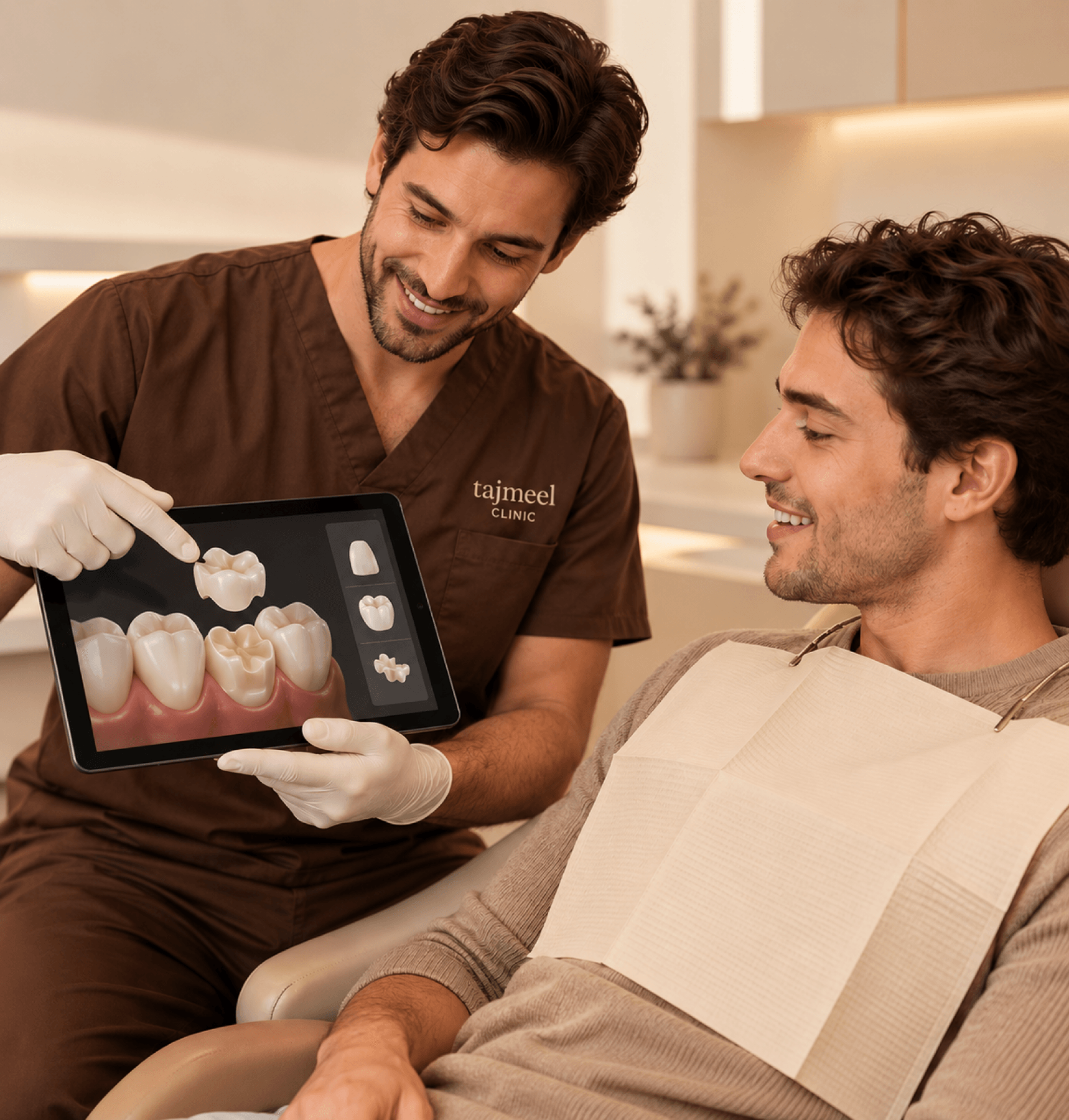
Crowns cap a damaged tooth to restore its strength and shape, while bridges replace missing teeth by anchoring to neighbouring teeth or implants. Both are custom-made to restore function and blend with your natural smile.
A Complete Rebuild, Carefully Planned
A full mouth prosthesis replaces or restores the full upper and lower dentition. It is planned around your bite, facial proportions and remaining teeth, and may combine crowns, bridges, implants or removable components.
Replacing What Is Missing
Dentures are removable replacements for some or all missing teeth. Complete dentures replace a full arch, while partial dentures fill gaps and clasp onto remaining teeth, restoring appearance, speech and the ability to chew.
The Teeth That Show, Replaced With Precision
Anterior prosthetic work replaces missing front teeth with fixed or removable restorations. Because these teeth are the most visible, planning focuses on shade, shape, proportion and the way the restoration sits against the lip and gum.
A New Smile, Without Commitment
Snap-On Smile is a removable appliance that clips over your existing teeth to change their appearance. It requires no drilling or injections, making it a reversible option for people who want to see a different smile before committing to fixed treatment such as veneers or crowns.
Shape, Shade, Alignment, Refined
Veneers are thin shells bonded to the front of the teeth to change their shape, shade or alignment. Lumineers are an ultra-thin option that often requires little or no tooth preparation, depending on the result being planned.
A Smile, Designed As A Whole
A smile makeover combines several treatments into one plan to change the overall appearance of your smile. Veneers, whitening, gum contouring and alignment may be brought together, sequenced so that each step supports the final result.
See It Before You Decide
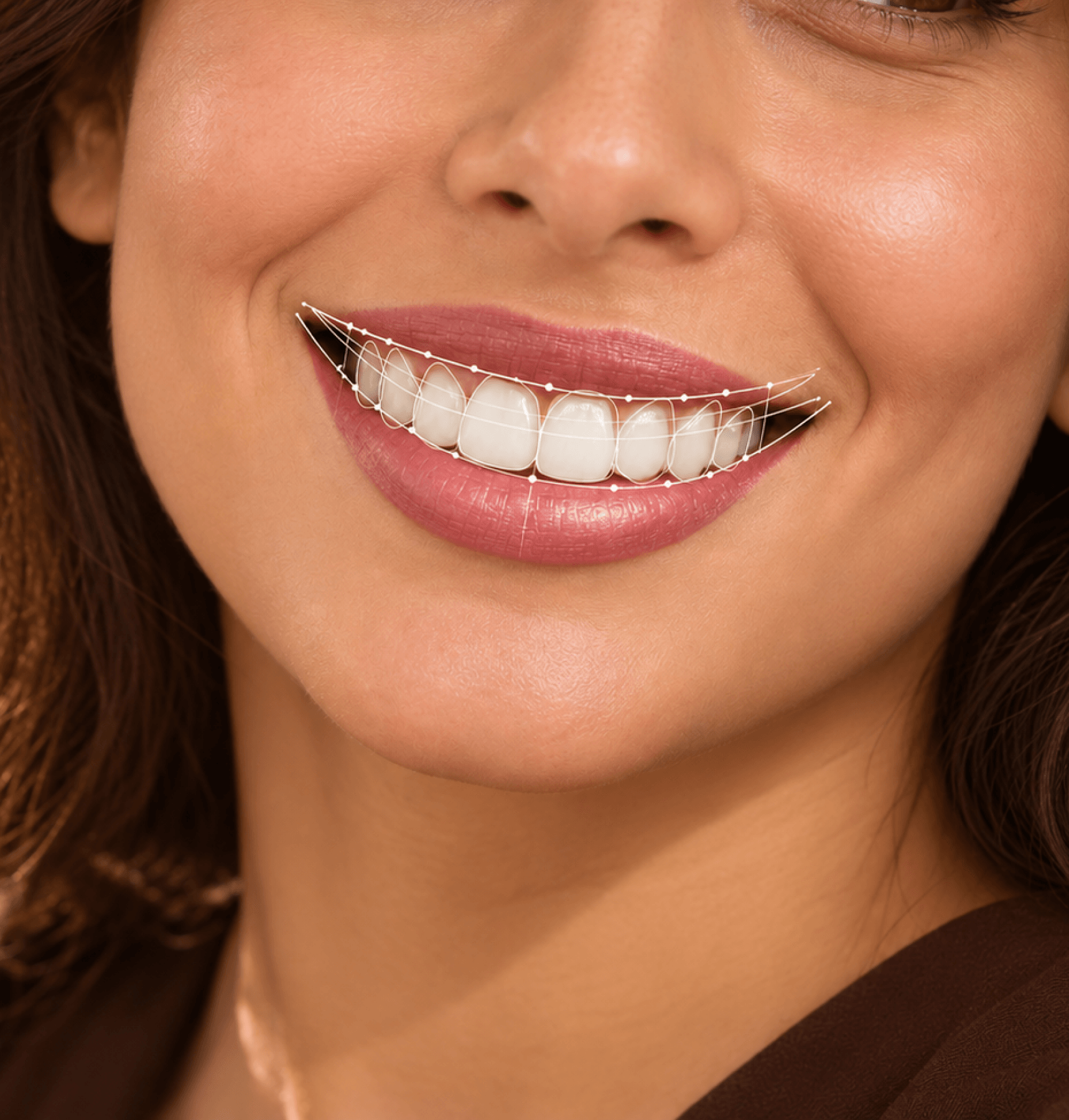
Digital Smile Design uses photographs, video and digital scans to plan your smile on screen before treatment begins. It allows proportion, shape and shade to be studied against your facial features, so the result is agreed in advance.
Brightness, Professionally Managed
Professional whitening lightens the shade of your natural teeth using a peroxide gel, often activated by light. Carried out under dental supervision, the concentration and contact time are controlled and your gums are protected throughout.
Precision, With Less Disruption
Laser technology can be used to lift existing veneers or to carry out soft tissue procedures with limited trauma. Laser energy targets the bonding material or tissue precisely, often reducing bleeding and preserving healthy tooth structure.
The Frame Around Your Smile
Gum reshaping refines the gumline to even it out or expose more of the tooth surface. Because gums frame the teeth, small changes in their outline can have a noticeable effect on how balanced a smile appears.
Balance Between Lip, Gum And Tooth
Gummy smile correction addresses an excessive display of gum when smiling. Because the cause may be the gum level, the length of the teeth, the upper lip or the jaw, treatment begins with identifying which factor is responsible.
Cleaning Beyond The Surface
Root planing cleans below the gumline to remove bacterial deposits from the root surfaces. Where gum pockets have formed, this deeper clean allows the tissue to settle and reattach, halting the progression of gum disease.
Protecting The Ground You Gained
Periodontal maintenance is a programme of scheduled cleanings and monitoring after gum treatment. Because gum disease can return, regular reviews keep bacteria under control and allow any change in pocket depths to be caught early.
Treating What Bleeding Gums Signal
Gum infection and inflammation are assessed and treated through a combination of professional cleaning, targeted therapy and improved home technique. Addressing gingivitis early can prevent it progressing to periodontal disease and bone loss.
Finding The Source, Not Masking It
Persistent bad breath and bleeding gums are investigated and treated rather than covered up. Assessment looks at the gums, teeth, tongue and contributing factors, so treatment addresses the cause rather than the symptom.
Access, Where Cleaning Cannot Reach
Flap surgery involves lifting the gum tissue to access the root surfaces and bone beneath. It is used where deep pockets have not responded to non-surgical treatment, allowing thorough cleaning and, where appropriate, reshaping or regeneration of bone.
A New Root, Precisely Placed
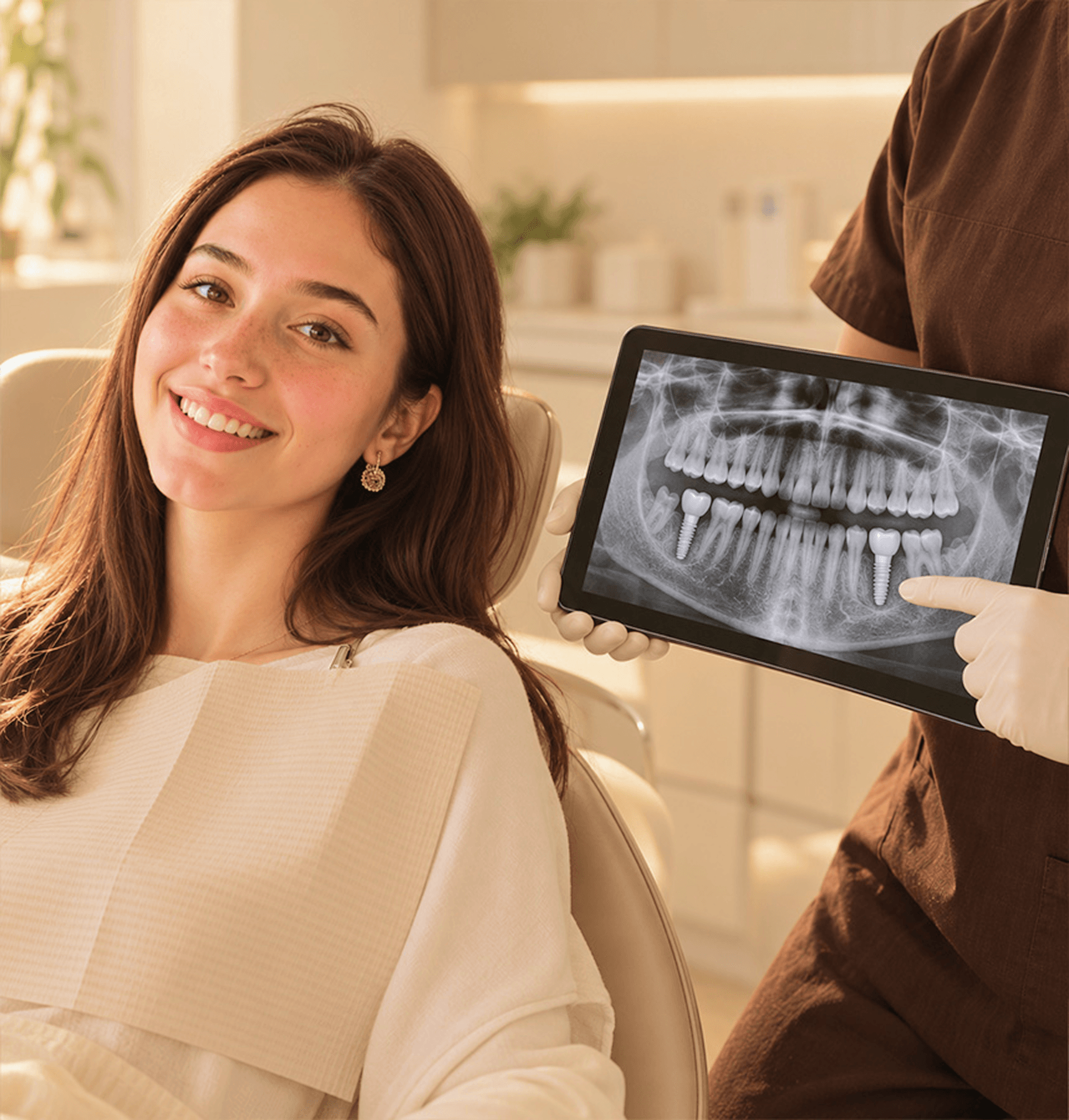
Dental implants are titanium or ceramic posts placed in the jaw to support replacement teeth. Simple cases involve uncomplicated placement, while complex cases may require grafting, guided surgery or staged treatment.
Implant And Crown, In One Visit
Same-day implant treatment places the implant and fits a crown in the same appointment, where bone and gum conditions allow. Digital scanning and in-clinic milling mean you leave with a tooth in place, with the definitive crown fitted once healing is confirmed.
Implant Planning, Guided By AI
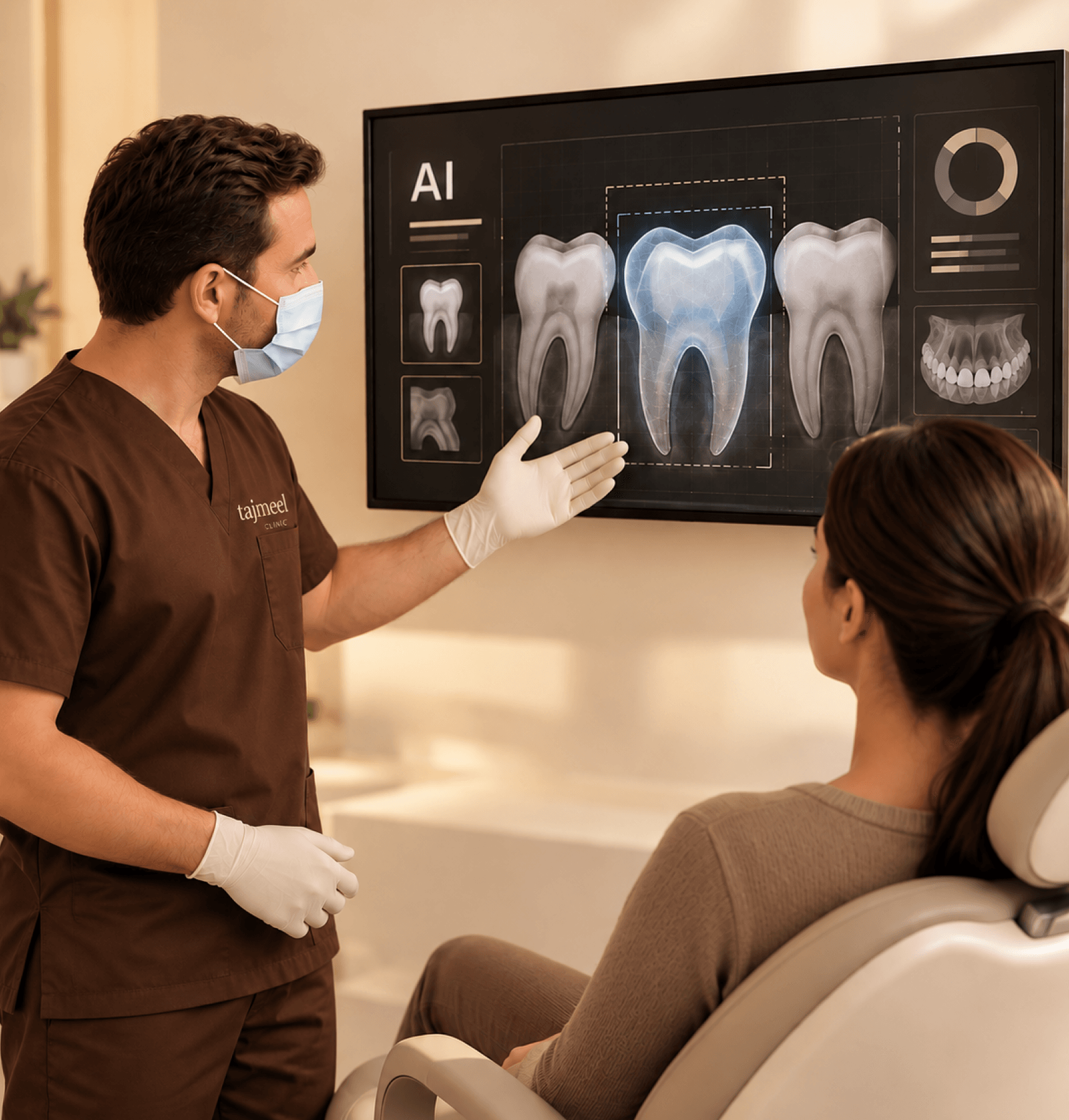
AI-assisted planning analyses 3D scans of your jaw to help map the position, angle and depth of each implant before surgery begins. Your dentist reviews and approves every plan, using the analysis to place implants consistently around nerves, sinuses and available bone.
A Full Arch, Firmly Supported
Full-arch rehabilitation replaces all the teeth in one or both jaws using a small number of implants to support a fixed bridge. It restores chewing, appearance and facial support for people with extensive tooth loss.
Building The Foundation First
These procedures increase bone volume so that an implant can be placed securely. A sinus lift raises the sinus floor to create height in the upper back jaw, while grafting and ridge augmentation rebuild width or height elsewhere.
Implants Planned For The Visible Result
Aesthetic implant treatment places implants with the final appearance in mind, particularly in the smile zone. Implant material, position and the shape of the surrounding gum are all planned so the replacement blends with neighbouring teeth.
Guided To The Planned Position
Navigation-guided surgery uses a tracking system to guide instruments to the position planned on a 3D scan. The dentist sees the drill position in real time, allowing implants to be placed accurately with respect to bone, nerves and the planned restoration.
Designed, Milled, Fitted In One Visit
CAD/CAM dentistry designs restorations digitally and mills them on site, so inlays, onlays, veneers and crowns can often be completed in a single appointment. This removes the need for impressions, temporaries and a second visit.
Digital Dentistry, Under One Roof
Tajmeel's digital dental studio brings navigation-guided surgery, laser technology, CAD/CAM and AI-assisted planning together in one unit. Working digitally from diagnosis to delivery supports accuracy, efficiency and clearer communication at every stage.
A Clean That Brushing Cannot Achieve
Professional cleaning removes plaque and hardened tartar, then polishes the tooth surfaces. Regular appointments keep gums healthy, reduce staining and give your dentist the opportunity to spot early changes.
Comfort First, Then The Plan
Dental pain is assessed and relieved promptly, with symptoms managed while definitive treatment is planned. For both adults and children, the priority is identifying the source of pain and making you comfortable quickly.
Catching Problems While They Are Small
Scheduled examinations are designed to detect problems at an early stage, when treatment is simpler and more conservative. Each visit combines examination, risk assessment and prevention advice suited to your mouth.
The Jaw, In Three Dimensions
A cone beam CT scan produces a three-dimensional image of the jaws, teeth and surrounding structures. It is used to plan implants and surgery, assess complex root anatomy and locate structures that standard X-rays cannot show.
One Image, Both Jaws
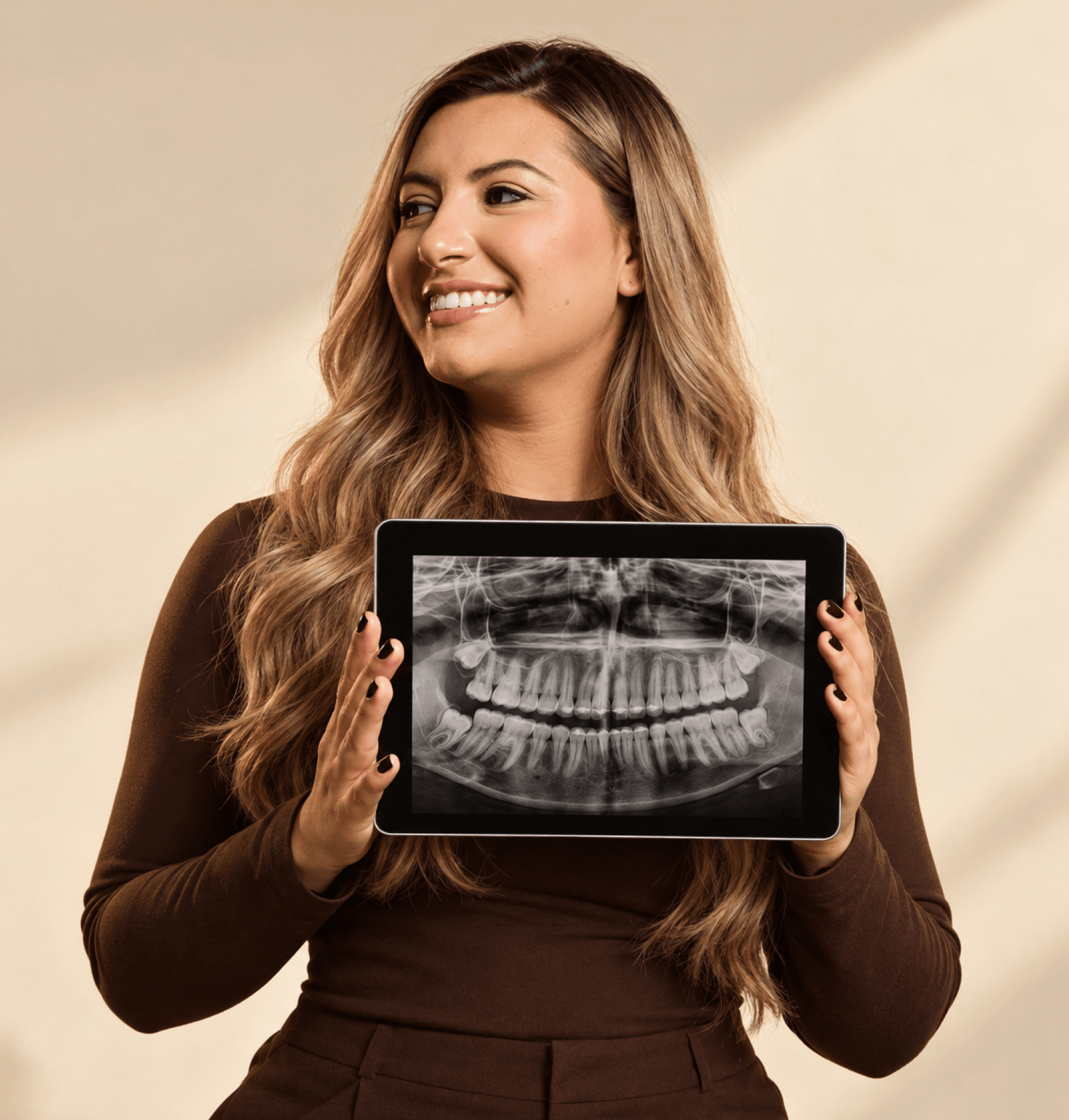
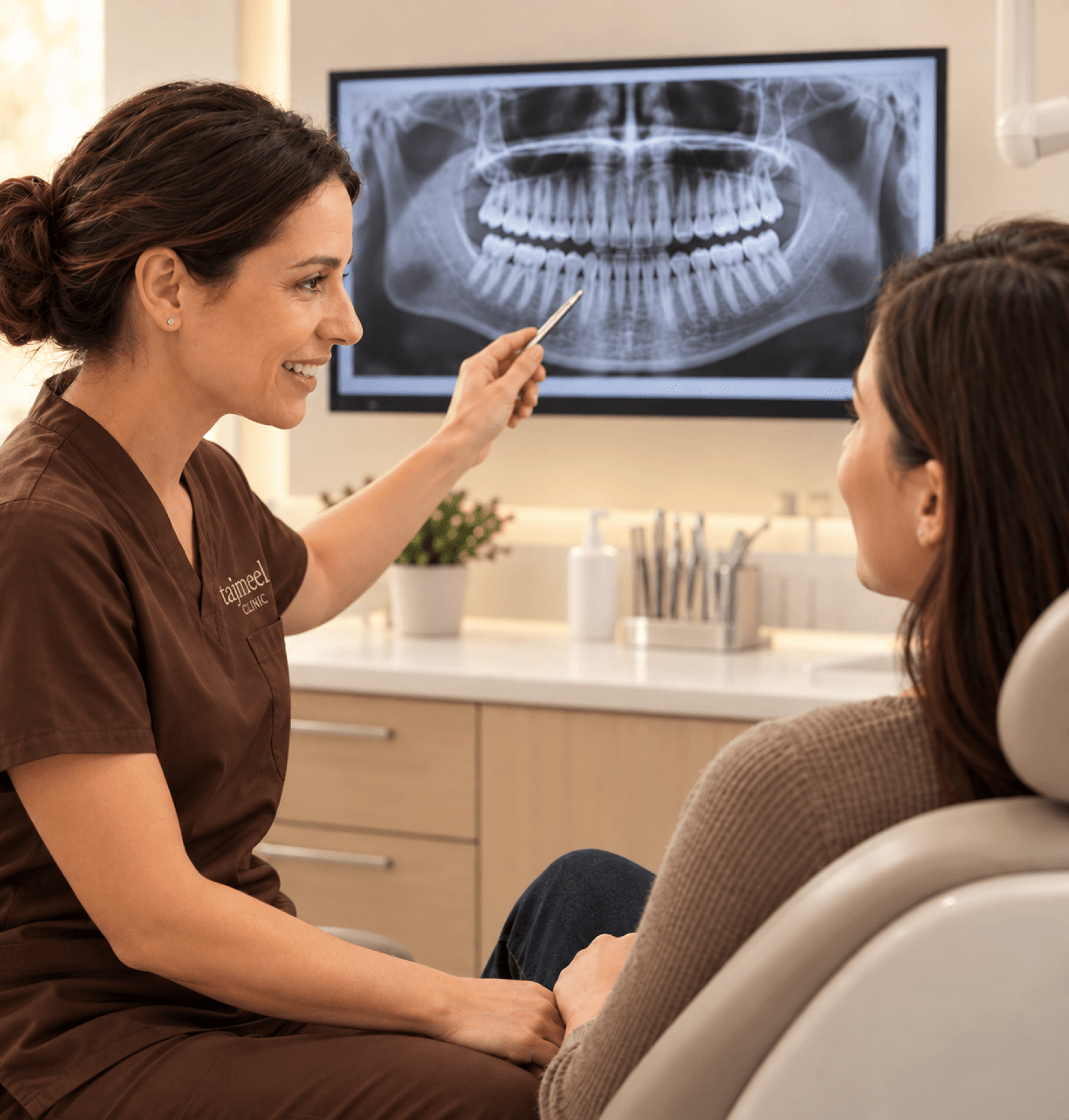
An OPG is a single panoramic X-ray showing all the teeth and both jaws in one view. It provides an overview of tooth position, wisdom teeth, jaw joints and bone levels, making it useful for screening and treatment planning.
Detail, Taken At The Chair
Intraoral X-rays are small, focused images of one or two teeth taken during your appointment. They show fine detail of the crown, root and surrounding bone, making them essential for diagnosing decay, infection and root problems.
A Record Of Where You Started
Standardised photography records your starting point and the completed work. Consistent lighting, angles and framing allow accurate comparison, support planning and communication with the laboratory, and give you a clear record of the change.
Protecting The Tooth From Within
Pulp therapy treats the inner tissue of a tooth with the aim of keeping the tooth in place rather than removing it. It is commonly used in children's teeth and in young adult teeth where the pulp is inflamed or exposed by decay or injury.